.png)
Not So Social: what happens when sharing becomes optional?
For women, social media is still part of the social script. But increasingly, it is no longer the proof that the moment happened.
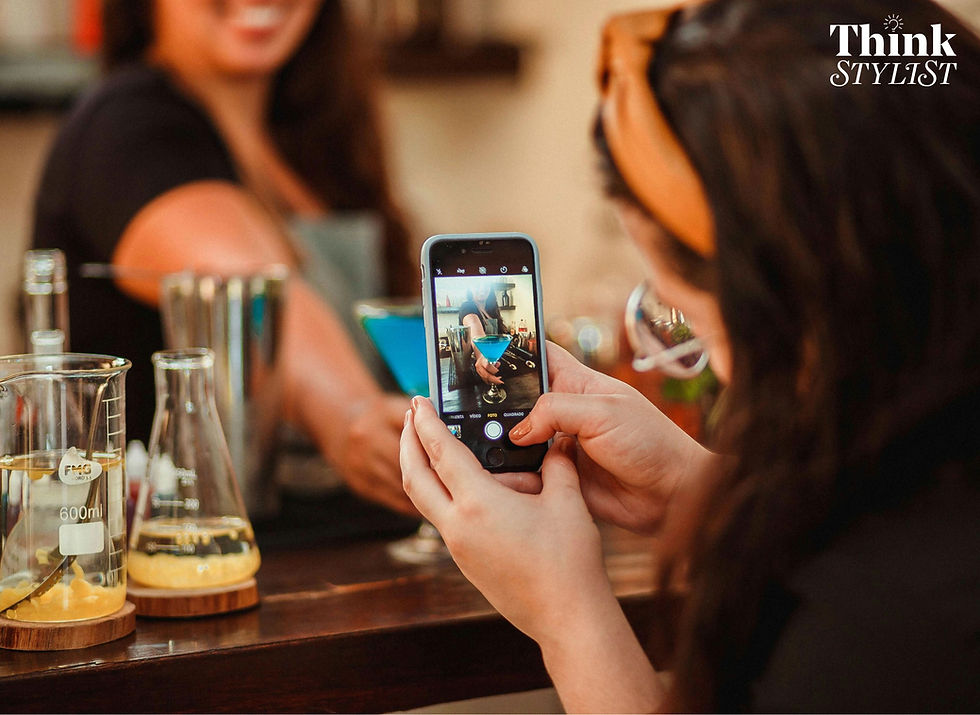
There was a time when a good social life came with visible evidence. A birthday dinner had a carousel. A weekend away had a photo dump. A night out had stories before the first drink had even arrived. To socialise was not only to be with people, but to be seen being with people.
That logic is beginning to fray. In our latest Think Stylist research, women are not rejecting digital culture, but they are recalibrating their relationship with it. Phones remain essential social tools, with 65% saying having a phone is important to their social life. Yet 64% also say they consciously try to stay off their phone when socialising. The phone still gets them there, but it is less welcome once they arrive.
“I’ve posted a lot less recently; I don’t really know who I’m talking to. My mum told me to do a pregnancy reveal on Insta but I don’t feel like I need to share things on there. I’m very conscious of being present.” – Helen, Thinkfluencer
Only 30% of women say sharing their social life online is important to them, while 47% actively disagree. That is a significant cultural shift. It suggests that the old equation, experience plus post equals participation, is losing its hold. For many women, the most valuable social moments are now the ones that do not have to perform.
Social media is moving backstage
One of the reasons posting has become more loaded is that the audience is no longer straightforward. The feed now collapses best friends, former colleagues, family members, acquaintances, brands, creators and strangers into a single, unknowable crowd. What once felt like casual self-expression can now feel like a broadcast to people you did not consciously choose.
This makes non-posting meaningful. It is not simply absence or disengagement – it is a form of control. Women are deciding which parts of their lives are available for public consumption, which belong in private and which do not need an audience at all.
The cultural texture of social media has shifted too. After the era of the deliberately unfiltered photo dump came a return of polish, filters and highly aesthetic content. The result is a strange middle ground, where authenticity itself can look curated. In that context, posting less becomes a way to step out of the performance loop.
What this means for brands
The important point for brands is that women are still using social media socially. They are just using it in quieter, less visible ways. It remains a discovery engine, a planning tool and a social archive with 40% using social media to find things to do. But the public feed is no longer the only stage that matters.
This shift asks for a different definition of impact. If women are posting less publicly, some of the most valuable influence is becoming harder to see: the saved post, the private recommendation, the group chat plan, the DM that turns into a booking, a purchase or a night out. Cultural relevance is no longer always visible in the feed, but it is still shaping behaviour.
That means brands need to move beyond chasing public proof and start designing for private momentum. The opportunity is to create ideas, experiences and messages that women want to pass on because they feel useful, entertaining, emotionally resonant or socially valuable, not because they have been prompted to post.
This is where deeper insight matters. Understanding what women choose not to share can be just as commercially important as understanding what they do. The brands that earn a place in private conversations will be the ones that understand the pressures, boundaries and motivations shaping modern social life.
At Think Stylist, we help brands decode these shifts in real time. Turning women’s behaviours, tensions and unspoken needs into insight that drives smarter strategy, stronger creative and more meaningful connection. Ready to map your brand? Get in touch to discuss a Social Infrastructure Audit for your brand.
Make sure you’re signed up to our insights newsletter, Muse, to get the latest thinking direct to your inbox every month.


